
Quantity and Quality
How many calories do you need?
A calorie is a unit of measurement that describes how much energy is released when your body breaks down food. Although calorie count alone does not dictate whether a food is nutritious, thinking about how many calories you need can guide healthy eating habits. If you are over age 60 and you want to maintain your current weight, how many calories do you need to eat each day? The Dietary Guidelines suggest:
Unsure which activity category you’re in? Consult the Dietary Guidelines for definitions of each level. You can increase your physical activity level by adding walking, jogging, dancing, recreational sports, and other similar approaches to your day.
Serving and portion sizes
A “serving size” is a standard amount of a food, such as a cup or an ounce. Serving sizes can help you when choosing foods and when comparing similar items while shopping, but they are not recommendations for how much of a certain food to eat.
The term “portion” means how much of a food you are served or how much you eat. A portion size can vary from meal to meal. For example, at home you may serve yourself two small pancakes in one portion, but at a restaurant, you may get a stack of four pancakes as one portion. A portion size may also be bigger than a serving size. For example, the serving size on the nutrition label for your favorite cereal may be 1 cup, but you may actually pour yourself 1½ cups in a bowl.
Portion size can be a problem when eating out. To keep your portion sizes under control, try ordering smaller appetizers instead of an entrée as your meal, or share an entrée with a friend. Or eat just one-half of an entrée and take the rest home to enjoy as a meal the next day.
Healthy food shifts
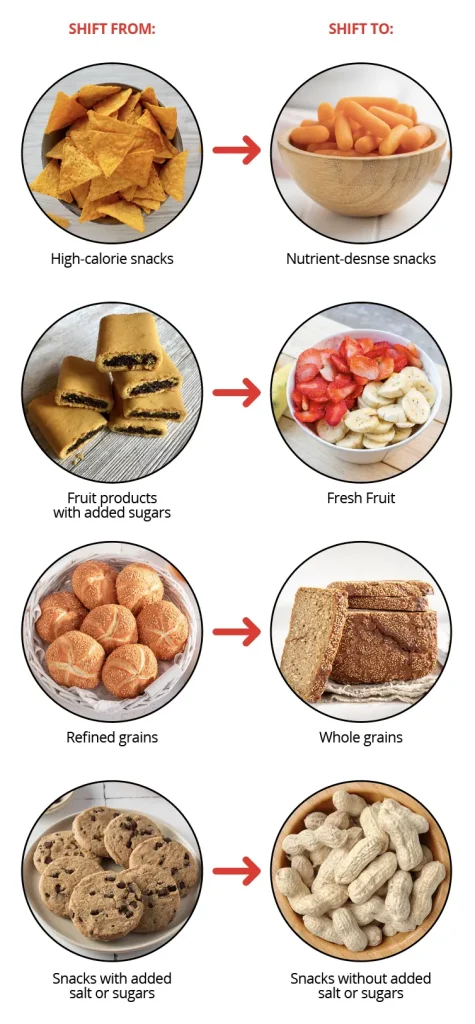
Eating the right amount is important, but so is making sure you’re getting all the nutrients you need. Older adults often need fewer calories, but more nutrients, which makes it essential to eat nutrient-dense foods. To eat nutrient-dense foods across all the food groups, you may need to make some changes in your food and beverage choices. You can move toward a healthier eating pattern by making shifts in food choices over time. Here are some ideas:
Healthy beverage shifts
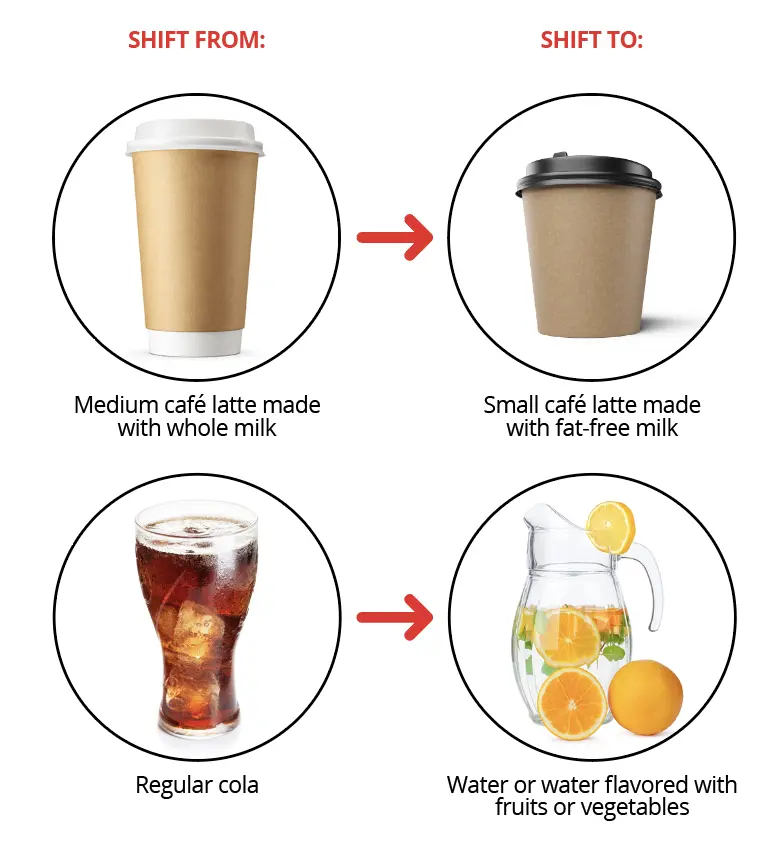
It’s easy to forget about calories you consume from beverages. If you drink sodas, creamy and sweet coffee drinks, or alcohol, swapping them out for healthier options can make a huge difference. There are plenty of beverage options that are low in added sugars, saturated fats, and sodium. Here are some options:
100-calorie snacks
Another way to think about the idea of nutrient-dense and calorie-dense foods is to look at a variety of foods that all provide the same calories. Let’s say that you wanted to have a small snack. You might choose:
- A 7- or 8-inch banana
- 20 peanuts
- 3 cups low-fat popcorn
- Two regular chocolate-sandwich cookies
- 1/2 cup low-fat ice cream
- One scrambled large egg cooked with oil
- 2 ounces baked chicken breast with no skin
These choices all have about 100 calories but provide different amounts of nutrients. The right choice for you may depend on what else you’re eating throughout the day.
Eating healthy is not just about how much you eat, it’s also about what you eat. Older adults should try to eat foods that are packed with nutrients while limiting foods that are high in calories but provide few nutrients. Swapping out snacks and beverages with nutrient-dense alternatives can help you get the nutrients you need while staying within your recommended number of calories.
Source: NIH National Instutute on Aging, https://www.nia.nih.gov/health/healthy-eating-nutrition-and-diet/how-much-should-i-eat-quantity-and-quality
Updated: February 2022